
Example: one page, three panels
A courier named Mira boards the last train with an empty mailbag. A letter dated tomorrow warns her not to deliver a parcel to her own address.
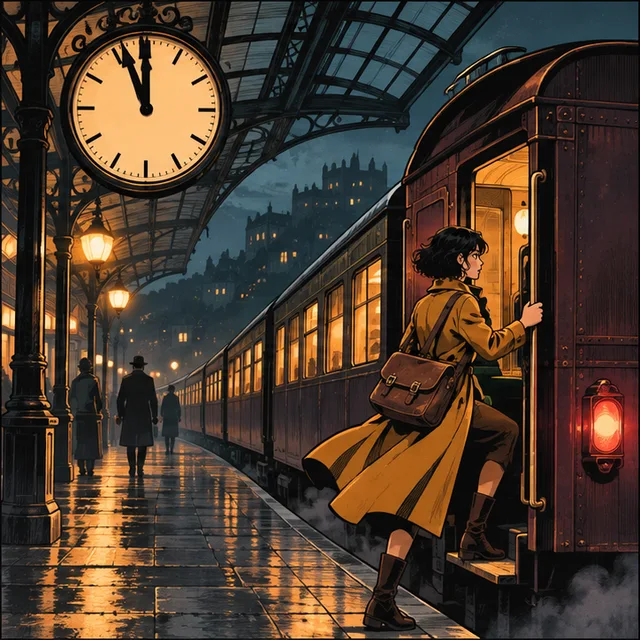
Panel 1
Wide shot: Mira steps into the final carriage. The station clock reads 11:59. Caption: The last train.
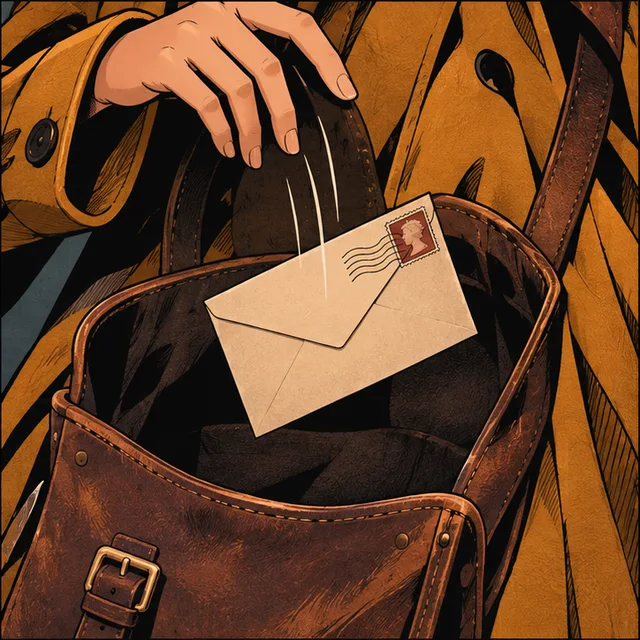
Panel 2
Close-up: a letter falls into the empty mailbag. The postmark is dated tomorrow. Mira: “That’s not possible.”
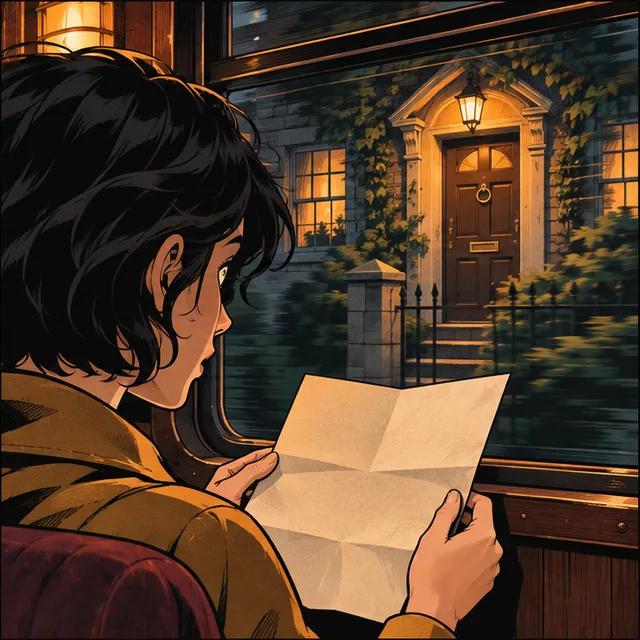
Panel 3
Over Mira’s shoulder: the letter warns her not to deliver a parcel to her own address. Outside the window, the train passes her front door.
Notice which detail changes from panel to panel: the station clock establishes the present, the postmark contradicts it, and the warning gives Mira a decision to make. The train passing her house is the last image, not another line of explanation. If the postmark and the address both need to be readable, do not squeeze them into the opening wide shot. Put each clue in the panel where the reader needs it.
What goes into a comic script?
A comic script is the written plan for a comic page. It tells the artist what to draw in each panel and tells the letterer which words the reader should see. Start with a page number, then number the panels in reading order. For each panel, give the visible action, name the speaker before each line of dialogue, and label a caption separately. A silent panel still needs a visual description, but it does not need an empty speech balloon.
The distinction matters when you adapt prose. A sentence like “Mira was beginning to suspect the train was wrong” tells a novelist what she thinks, but it gives an artist no specific image. Show her holding a letter under the carriage light, with tomorrow’s date legible on the postmark. The reader can notice the same clue she does. The script generator returns those drawing directions as text; the page layout, artwork, and lettering come later.
How to write a comic script an artist can draw
Describe what the reader can see, not only what a character thinks. Give each panel one drawable moment: an arrival, a discovery, or a reaction. A close-up can reveal a clue; a wide shot can show where everyone is standing. Reserve a caption for information the picture cannot carry, such as a time jump.
Read the script once without the dialogue. If the action is unclear, improve the visuals before adding more speech. Then read the dialogue aloud and shorten any line that competes with the artwork. Put a reveal at the start of a new page when you want the page turn to hide it.
Give the generator a scene, not an entire plot
A useful brief names the character, the place, what the character wants right now, and the event that makes the next choice difficult. For the train scene, Mira wants to finish a delivery and go home; the letter makes those two goals conflict. That is enough for a short sequence. You do not need the history of the railway or a full biography of Mira unless a detail changes what appears on the page.
When a detail must survive the draft, state it plainly: “Keep the sender unknown” is more useful than “make it mysterious.” You can also specify what the reader should know at the end and what should remain unanswered. Pick the number of pages for this scene, not for the entire chapter. For a longer manga or webtoon script, draft one scene at a time and carry forward the names, props, and unresolved questions that matter.
Choose the panel count around the reveal
Two panels can set up an expectation and overturn it. Three give you a middle beat, such as the moment Mira notices the postmark before she reads the warning. Four can leave space for a reaction without asking a single drawing to show a hand reaching, opening, and recoiling all at once. If you cannot describe what a panel depicts at one instant, pick the strongest moment or split the action.
For a printed comic, decide what the reader should see before turning the page. A warning at the bottom of one page can make the view of Mira’s house feel earned on the next. For a vertical-scroll story, that pause can happen in the space between images instead. A numbered script provides the order, not the final reading rhythm. Thumbnail the sequence before committing to panel sizes or deciding how far apart the drawings should sit.
See panel pacing in finished manga and comicsWrite dialogue that leaves room for the drawing
Read the lines aloud and circle any sentence that explains a fact already visible. If the date on the letter can be read, Mira does not need to recite the whole postmark. A short reaction can tell us more about her than a description of the evidence. Give each line an owner, including a voice heard off panel, so the letterer knows whether it needs a tail, a different treatment, or a caption.
Try the longest line inside a rough panel before approving the script. It may fit in a text document but cover an expression, a hand, or the clue the reader needs. Shorten the line first. If the exchange still needs space, give the second speaker a separate panel or change the framing. For a quiet beat, check whether a look or a gesture is enough before adding narration.
Test the dialogue in the speech bubble makerCheck continuity before you draw
Read the visual directions without the dialogue. Can you tell who is in the carriage, where Mira is standing, and when she picks up the letter? Track the objects that carry the scene: the bag starts empty, the letter falls into it, then Mira holds the letter. If the next panel shows the letter sealed on a seat with no explanation, correct the description before it becomes a drawing someone has to redo.
Then check what the characters know. Mira can react to the date as soon as she reads it, but she should not know the sender if the script has never shown a signature. For recurring characters, keep a small note with names, visual identifiers, and facts revealed so far. Supply the relevant part when generating the next scene. The tool does not remember an earlier draft or pull continuity from your existing comic projects.
Turn the text draft into a drawing brief
Copy the script to revise it with a collaborator, or download the plain text file and keep it alongside the artwork. Use the page and panel numbers when leaving feedback: “Page 1, panel 2: make the date readable” gives an artist something concrete to change. Keep dialogue under the matching panel rather than in a separate list; that makes it easier to catch a speech line that belongs to a different moment.
Before drawing, make a small thumbnail of the page with empty shapes for the balloons. Mark the focal point in each panel and trace the path your eye takes between the shapes. If the letter appears after Mira reacts to it, swap the beats or adjust the composition. Once the order is clear, open a comic project and use the script as a reference for each panel. This tool does not import the draft or render it automatically.
Open MangaMaker
Comic script questions
Does this generate comic images?
No. The output is a text storyboard. You can use it as a plan when you lay out and draw or generate your own comic.
What is included in the download?
The UTF-8 text file includes the title, numbered pages and panels, visual directions, dialogue and any captions. It opens in a text editor or writing app.
Do I need an account?
The example is public. Sign in to generate your own draft. The tool allows up to five attempts per account per UTC day and uses no credits.
Can I write a manga or webtoon script?
Yes. Describe the format and intended reading order in the premise. The result is a numbered text plan, not a left-to-right, right-to-left, or vertical-scroll page layout.
Is my story saved?
The premise is sent to the AI provider to generate the draft. MangaMaker does not save the text of the premise or result to the generation log. Copy or download the result before closing the page.